**This website contains affiliate links. We may earn a commission when you click a link, buy a product or subscribe to a service, it helps us to support the maintenance of the website.
★ BROOKS ★
Rating:
Best For: Structured support
Price Range: $100 – $170
Cushioning: DNA Loft foam
Heel Drop: 10–12mm
Shop Brooks Running★ HOKA ★
Rating:
Best For: Max cushioning
Price Range: $130 – $185
Cushioning: CMEVA foam
Heel Drop: 4–5mm
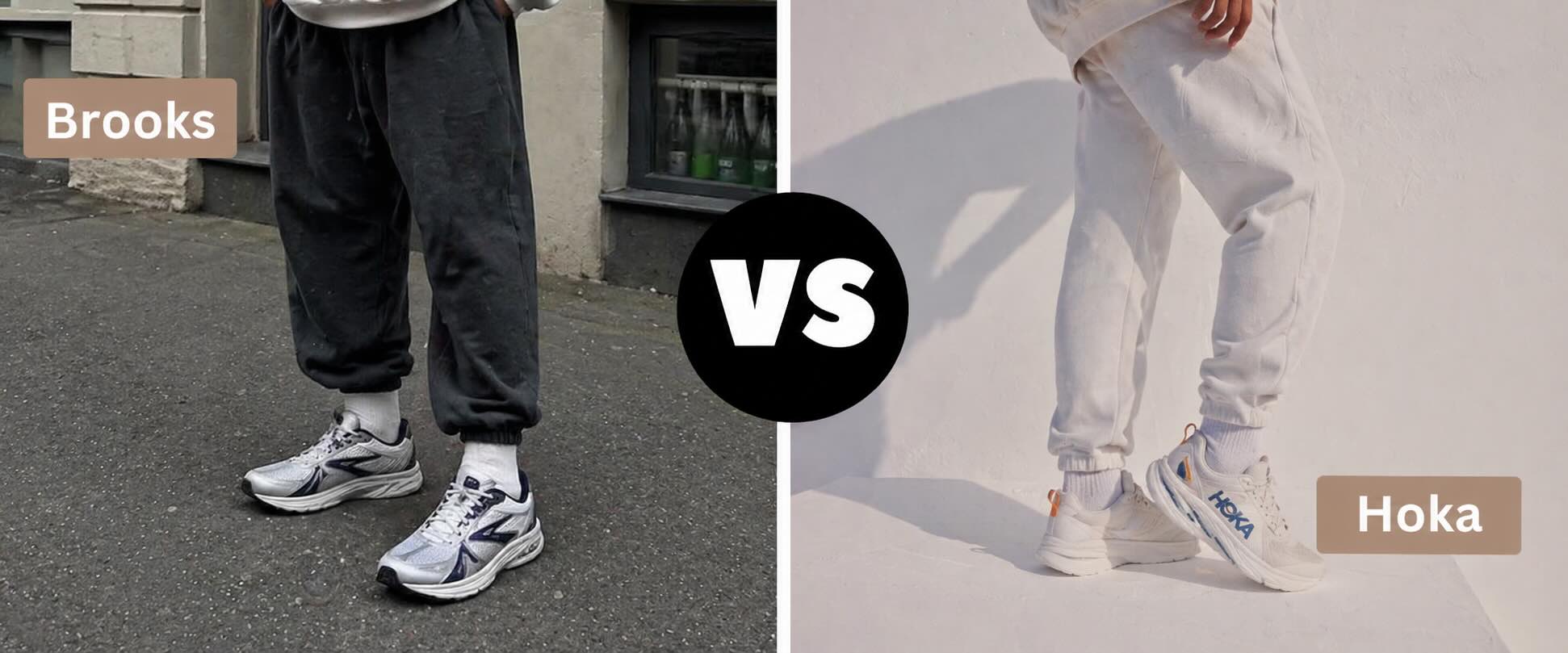
Shop Hoka RunningIf you have been shopping for running shoes lately, two brands keep showing up everywhere: Brooks and Hoka. Both have earned massive followings among casual joggers and serious marathoners alike, but they take very different approaches to how a running shoe should feel on your foot.
Brooks has been around since 1914 and has built its reputation on biomechanics research, structured support, and a traditional running shoe feel. Hoka, founded in 2009, disrupted the market with oversized midsoles and ultra-soft cushioning that looked unusual at first but quickly won over runners who wanted a cloud-like ride. The question is not which brand is better overall, but which one is better for you and your running style.
Cushioning Philosophy
This is where the two brands diverge most dramatically. Brooks uses its proprietary DNA Loft and BioMoGo DNA foam systems, which adapt to your stride by responding to the pressure and force you apply. The cushioning is responsive without being overly soft. You feel connected to the ground, and there is a noticeable energy return that pushes you forward with each stride.
Hoka takes a completely different approach. Their midsoles are noticeably thicker, sometimes towering at 30mm or more, yet the shoes remain surprisingly lightweight. The cushioning absorbs impact aggressively, which means your joints take less punishment on long runs. If you deal with knee pain or plantar fasciitis, that extra cushioning can be a game changer. The tradeoff is that some runners feel slightly disconnected from the road surface.
Heel Drop and Ride Feel
Brooks typically designs shoes with a 10 to 12mm heel-to-toe drop, which promotes a heel-strike running pattern. This is comfortable for most recreational runners and provides a familiar, stable ride. Hoka, on the other hand, usually sits around 4 to 5mm drop despite the thick midsole. That lower drop encourages a more midfoot or forefoot strike, which can feel more natural once you adjust to it. The rocker geometry in many Hoka models also creates a smooth rolling motion through your gait cycle, making transitions feel effortless.
Fit and Comfort
Brooks shoes generally fit true to size with a slightly narrower profile in most models. Their engineered mesh uppers provide targeted breathability, and the internal structure holds your foot securely without feeling restrictive. Models like the Ghost and Adrenaline GTS have become benchmarks for comfortable everyday running shoes because they just work right out of the box.
Hoka shoes tend to run slightly wider in the midfoot and toe box, which is great news if you have broader feet or prefer extra room. The plush tongue and padded collar create a sock-like fit that wraps around your foot. However, some runners find that the extra volume in the midsole creates a slightly unstable feeling on uneven terrain, almost like running on a platform. It takes a few runs to adjust if you are coming from a more traditional shoe.
Durability and Build Quality
When it comes to mileage before replacement, Brooks has a slight edge. Most Brooks running shoes last between 400 and 500 miles before the cushioning breaks down noticeably. The rubber outsoles, particularly on models like the Ghost, use segmented crash pads that wear evenly over time. You get consistent performance for most of the shoe life.
Hoka shoes typically last around 300 to 450 miles. The softer foam compound that makes them so comfortable upfront also means it compresses faster over time. The outsole rubber is thinner in some models, which can lead to faster wear on abrasive surfaces. That said, newer Hoka models have improved significantly in this area, and the gap is closing.
Popular Models Compared
| Feature | Brooks Ghost 16 | Hoka Clifton 10 |
|---|---|---|
| Price | $140 | $145 |
| Weight | 9.6 oz (M) | 9.2 oz (M) |
| Heel Drop | 12mm | 5mm |
| Cushioning | DNA Loft v2 | CMEVA foam |
| Best For | Daily training | Easy/long runs |
| Durability | 400-500 miles | 300-400 miles |
| Arch Support | Neutral | Neutral |
| Outsole | Segmented crash pad | Durabrasion rubber |
Stability and Support
| Feature | Brooks Adrenaline GTS 24 | Hoka Arahi 7 |
|---|---|---|
| Price | $140 | $140 |
| Support Type | GuideRails holistic | J-Frame support |
| Weight | 10.2 oz (M) | 9.7 oz (M) |
| Best For | Overpronation control | Mild overpronation |
| Feel | Structured, firm | Soft, guided |
For runners who need stability shoes, both brands deliver solid options. Brooks uses its GuideRails system, which keeps your body aligned by limiting excess movement rather than forcing your foot into a specific position. It feels natural and unobtrusive. Hoka uses a J-Frame design that cradles the foot with firmer foam along the medial side. Both work well, but Brooks tends to feel more structured while Hoka maintains that signature plush ride even in stability models.
Brooks vs Hoka: Video Comparison
Price and Value
Both brands sit in the premium running shoe category, but Brooks tends to come in slightly cheaper across comparable models. The Ghost 16 at $140 competes directly with the Clifton 10 at $145, and the performance difference at that price point is mostly about preference, not quality.
Where value gets interesting is in durability. If a Brooks shoe gives you an extra 50 to 100 miles of quality cushioning, that is real money saved over time. On the other hand, if Hoka cushioning system keeps you injury-free and running consistently, the value of those extra dollars is hard to argue against. The best shoe is the one that keeps you running, period.
Who Should Choose Brooks?
Brooks is the better choice if you prefer a traditional running shoe feel with responsive cushioning and a connected-to-the-road sensation. Runners who like a higher heel drop, value structured support, and want a shoe that will hold up for serious mileage tend to gravitate toward Brooks. The Ghost series is perfect for daily training, while the Adrenaline GTS line is one of the best stability shoes on the market for overpronators.
Who Should Choose Hoka?
Hoka is ideal for runners who want maximum cushioning without heavy weight. If you run long distances, deal with joint pain, or simply enjoy a softer, more forgiving ride, Hoka delivers like no other brand. The Clifton is an exceptional everyday shoe, and the Bondi is the go-to for runners who want the absolute most cushioning available. Trail runners should also look at Hoka Speedgoat line, which dominates in ultramarathon circles.
Final Verdict
There is no wrong answer here. Brooks and Hoka are both excellent running shoe brands that approach the same problem from different angles. Brooks gives you a proven, reliable, biomechanically refined shoe that works for most runners. Hoka gives you a revolutionary cushioning experience that has changed what runners expect from their footwear. Try both if you can, because the right shoe for you is the one that disappears on your feet and lets you focus on the run.
Ready to Find Your Perfect Running Shoe?
Shop both brands and discover which one matches your stride.
Shop Brooks Shop Hoka