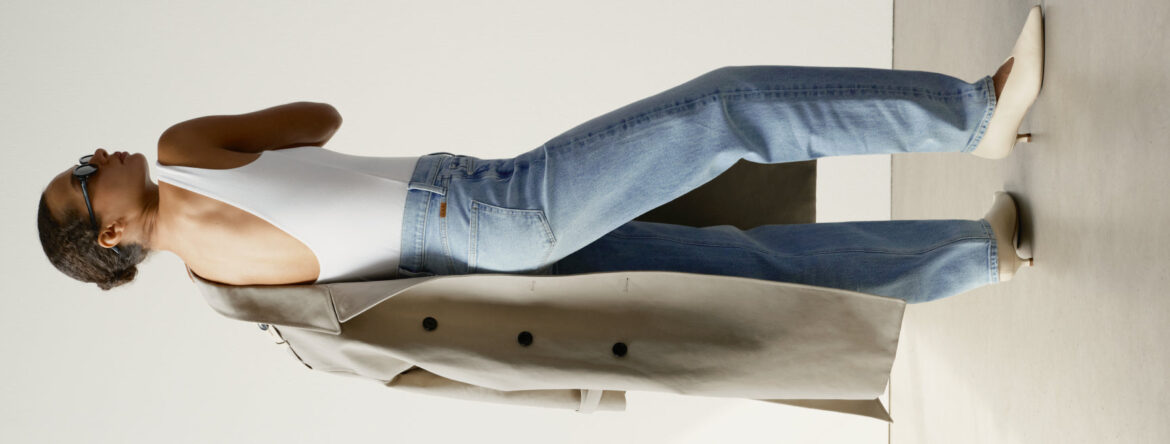
There is a particular moment that happens when you discover a brand like AYR. You spot a pair of jeans that look exactly right, you click through, and then you see the number: $265. Not $89. Not $128. Two hundred and sixty-five dollars, for one pair of jeans.
AYR — short for All Year Round — has spent the last decade building its reputation on precisely that tension. The brand promises fewer, better pieces: denim that genuinely fits, shirting you will keep for a decade, and knitwear that does not pill into oblivion after three washes. The pitch is seductive. The prices are not small.
So the question worth answering is not whether AYR makes nice clothes. It does. The real question is whether the specific things AYR charges a premium for are the things that actually matter once the clothes are hanging in your closet. I went through the range, the fabrics, the pricing and the recurring complaints to work out where the money genuinely goes — and where you are simply paying for the label.
What Is AYR, Exactly?
AYR launched in 2014 out of the Bonobos family and quickly carved out a niche sitting somewhere between accessible contemporary and full luxury. It is not Everlane, which built its identity on radical price transparency and $98 basics. It is not The Row either. It occupies the awkward, interesting middle: premium fabrics, small seasonal drops, and a tight core collection that barely changes from year to year.
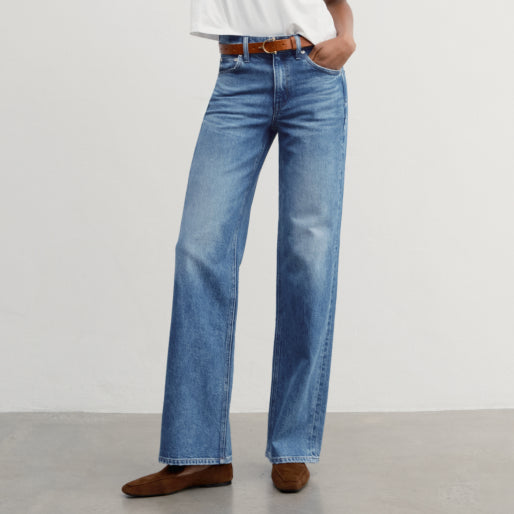
The catalogue is deliberately narrow. Denim is the anchor, with woven shirting, knitwear, trousers and a small outerwear range built around it. The product names are playful — The Secret Sauce, The Deep End, The Big Salad, The Bomb Pop — which does a good job of disguising how genuinely conservative most of the silhouettes are. That is meant as a compliment. These are clothes designed to be worn for years, not photographed once and retired.
The Price Tag: What You Actually Pay
Before judging value, it helps to look at real numbers rather than marketing language. Here is what AYR’s core categories actually cost at full price.
| Category | Typical range | Signature piece | Price |
|---|---|---|---|
| Denim | $195 – $345 | The Secret Sauce | $265 |
| Woven shirts | $73 – $245 | The Alpha | $225 |
| Knits & sweatshirts | $125 – $195 | The BFF | $145 |
| Sweaters | $395 | The Arc | $395 |
| Trousers | $98 – $285 | The Bam | $285 |
| Outerwear | $195 – $1,250 | The Big Win | $695 |
| Dresses | $141 – $285 | The Charm | $285 |
A few things jump out immediately. Denim clusters tightly around $265, which is genuinely premium but not outrageous next to Frame or Citizens of Humanity. Sweaters at $395 are where the brand starts asking a great deal of you. And outerwear spans an enormous range, from a $195 lightweight layer up to a $1,250 coat that most shoppers will never seriously consider.
The Denim: Where AYR Earns Its Reputation
If AYR justifies its pricing anywhere, it is in denim. The Secret Sauce is the piece that built the brand’s word of mouth, and reading through owner reviews the pattern is remarkably consistent: people who buy one pair tend to come back for a second.
The reason is fit engineering rather than fabric alone. AYR’s denim uses a substantial, structured weave with a small amount of stretch — enough to move with you, not enough to go slack by lunchtime. That last part is the genuine differentiator. The most common complaint about $100 denim is not that it looks cheap on day one; it is that it stretches out and stops holding its shape by the third wear. AYR’s denim largely does not do that, and that single property is what people are really paying for.
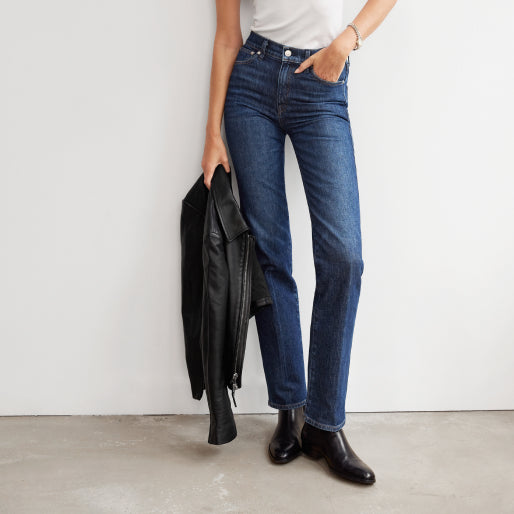
Rises are high and consistent, leg lines are clean, and most styles are cut to work without tailoring. For anyone who has spent $80 on jeans and then another $40 getting them hemmed, that quietly changes the value calculation.
Fabric and Construction Quality
Beyond denim, quality is more uneven — which is worth stating plainly in a review that calls itself honest.
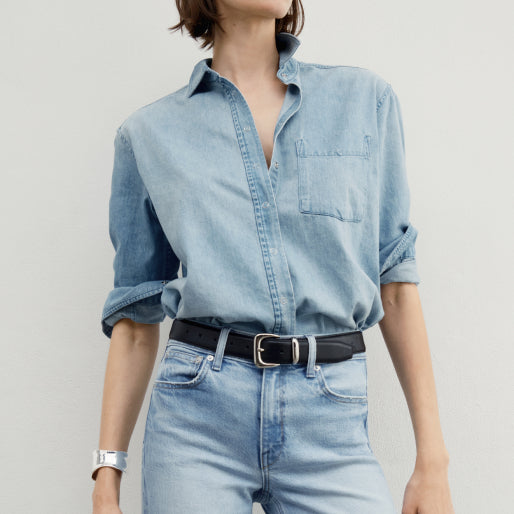
The woven shirting is very good. The cotton has real body, the collars hold their shape, and the oversized cuts are properly drafted rather than simply sized up. Knitwear is where opinions split. The cotton pieces hold up well, but the $395 sweaters sit in a bracket where shoppers reasonably expect flawless longevity, and pilling reports do appear.
The most repeated long-term criticism across owner reviews concerns durability at stress points: pilling in high-friction areas, and occasional weakness near seams after a couple of years of regular wear. This is not universal, and plenty of owners report denim lasting far longer than that. But it does mean AYR is not automatically a buy-it-for-life brand, and it would be dishonest to present it as one.
Where AYR Falls Short
Three things consistently work against the brand. First, the discount rhythm. AYR runs sales, and if you buy at full price the week before one lands, that $265 pair can reappear at a meaningful markdown almost immediately. Patience is rewarded here more than the brand would like to admit.
Second, the range is narrow. That is a feature if the aesthetic suits you and a genuine problem if it does not. The size run does not extend across every style, and inclusivity has been a recurring point of criticism.
Third, price creep at the top end. A $1,250 coat and $395 sweaters push AYR into territory where it competes with heritage labels that have far deeper reputations for longevity — a difficult comparison to win.
| Brand | Jeans (typical) | Best known for | Returns | Best for |
|---|---|---|---|---|
| AYR | $265 | Fit-engineered denim, clean shirting | 30 days | Investment denim that holds its shape |
| Everlane | $98 – $128 | Price transparency, basics | 30 days | Budget-conscious staples |
| Madewell | $128 – $168 | Accessible denim, frequent sales | 30 days | Trend-led denim on a budget |
| Frame | $200 – $350 | Premium LA denim | 30 days | Fashion-forward premium denim |
| Frank & Eileen | $268 – $328 | Italian-made shirting | 30 days | Shirting above all else |
Sizing and Fit
AYR runs fairly true to size, but the cuts are intentional. Denim tends toward a high rise and a structured waistband, so if you are between sizes and want a relaxed feel, sizing up is the safer call — the fabric will not give much once you are wearing it. Shirting is cut generously and often deliberately oversized, so ordering your usual size normally delivers the intended look rather than something snug.
The bigger practical point is that because AYR’s silhouettes are quite specific, the brand rewards people who already know what shape they like. If you are still working that out, the 30-day return window is your friend.
Who Should Buy AYR (and Who Should Not)
Buy AYR if you have settled into a personal uniform, you wear denim several times a week, and you would rather own four excellent pairs than twelve mediocre ones. At roughly $265 a pair worn twice weekly for two or three years, the cost per wear lands comfortably under a dollar — which is a genuinely good outcome by any measure.
Skip AYR if you enjoy variety, if you change silhouettes as trends move, or if you are building a wardrobe from scratch on a tight budget. In that case Everlane or Madewell will stretch your money considerably further, and you can graduate to a single AYR piece later, once you know exactly what you want from it.
The Verdict: Is AYR Worth the Money?
For denim, yes — with a caveat. The fit engineering is real, the fabric holds its shape, and the pieces earn their keep if you actually wear them hard. That is where the premium is defensible.
For everything else, it depends on the item. The shirting is strong and competitively priced against Frank & Eileen. The $395 sweaters and four-figure outerwear are much harder to defend on pure value, and those are precisely the pieces where the label is doing more work than the fabric.
The honest summary: AYR is worth it as a targeted purchase, not as a wholesale wardrobe strategy. Buy the denim, seriously consider the shirting, wait for a sale on everything else — and you will get very close to the value the brand promises.
Frequently Asked Questions
Is AYR a luxury brand?
Why are AYR jeans so expensive?
Do AYR jeans stretch out?
What is AYR’s most popular product?
Does AYR ever go on sale?
How is AYR’s sizing and return policy?
